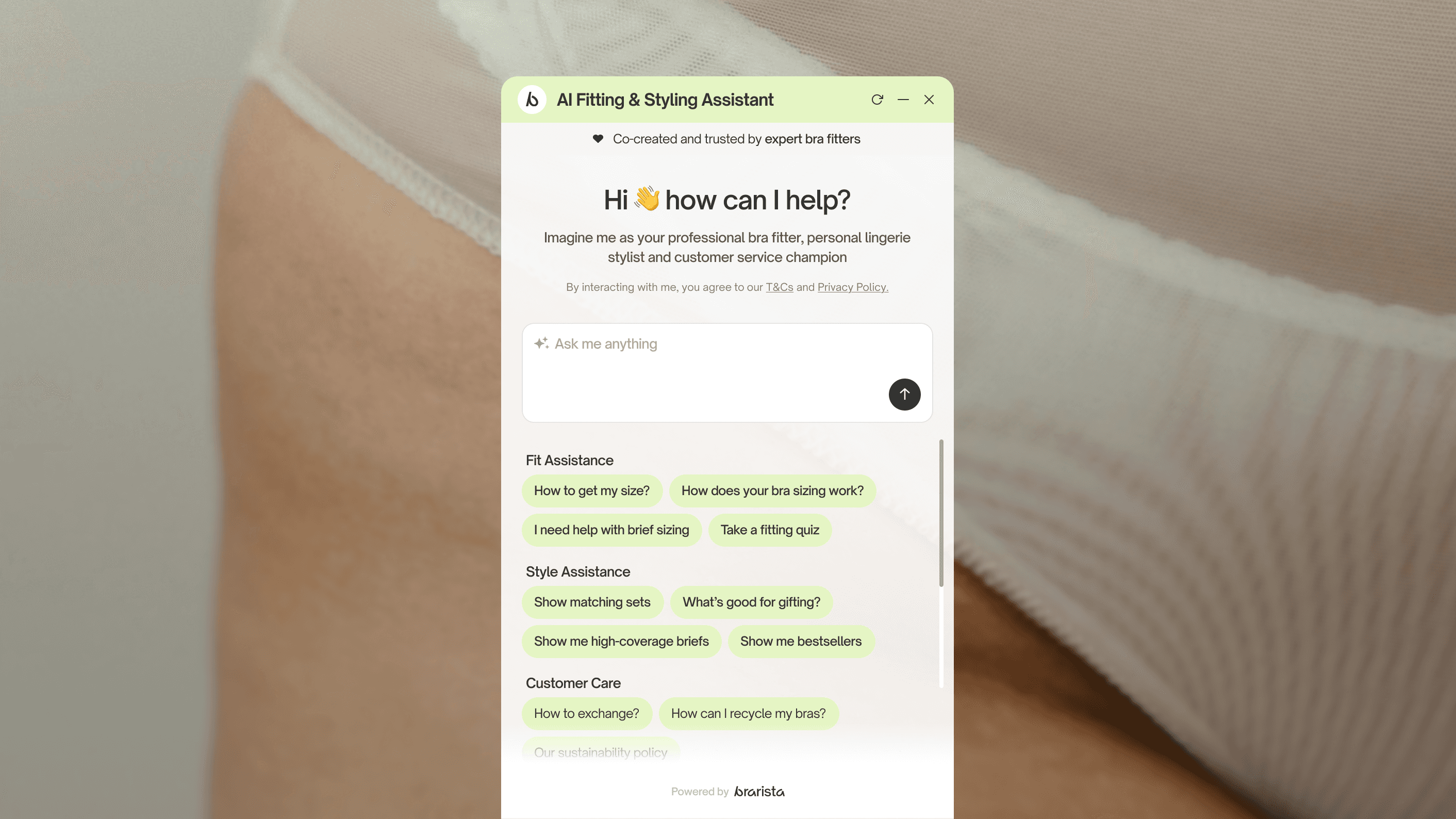
Conversational AI for Lingerie Retail @Brarista
Brarista is the world's first conversational AI platform built for lingerie retail, translating the nuance of in-store fitting and styling into a scalable digital experience. As a B2B2C white-label solution, it helps retailers deliver personalised expertise online while reducing returns and boosting profitability.
This case study reflects a year of designing the AI experience, collaborating cross-functionally with the founder and engineers, and shaping the narratives that define the brand.
Year
November 2025 - Present
Disciplines
Product Design
Web Design
Product Marketing
7.5x
Client growth during my time at Brarista
20+
User testing sessions conducted
~70%
Inbound demo interest driven through digital content
Research
Culture of co-creation 👯♀️
When I first joined Brarista as a student consultant, my first month was spent dissecting the lingerie market, evaluating competitors, assessing the product's UX, and translating everything into a go-to-market plan. This systems-level view grounded every design decision that followed and prepared me for Brarista's collaborative research culture.
Building on this foundation, my work transitioned into co-creation with both retailers and end-users. As a B2B2C product, we needed to understand both audiences in tandem. I supported ongoing studies both online and in person, beginning with semi-structured interviews and moving into iterative usability testing as the beta matured.
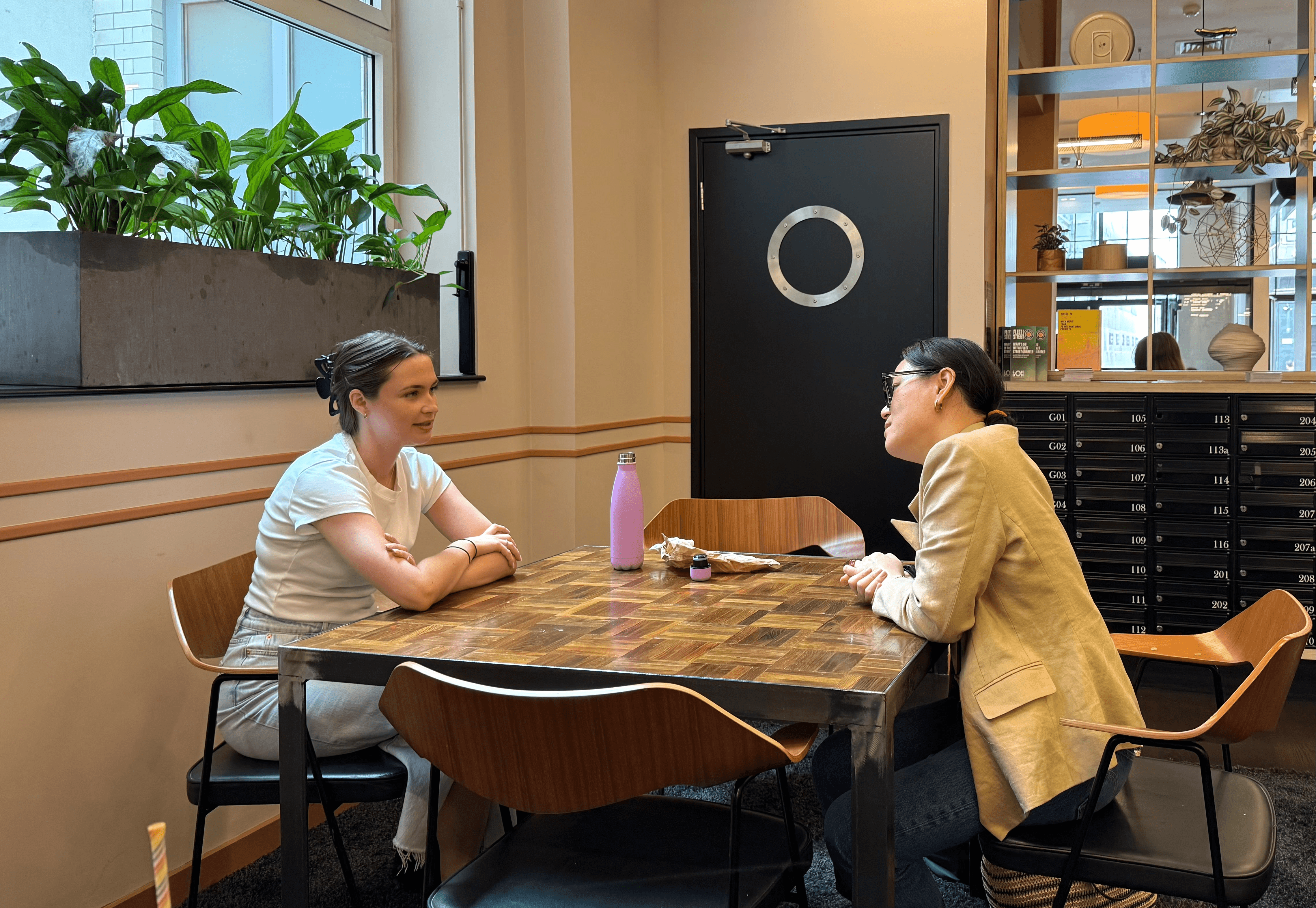
Group usability session with beta testers
We brought users in at least once a month, with each round of findings thematically analysed and shared with the senior designer and our founder. These insights shaped feature prioritisation and guided our agile sprint cycles. The goal wasn’t just to validate major features, but also to surface friction early and refine the beta through small adjustments, from copy tone to interaction bugs.
We also ran early experiments with Tellet, an AI-driven interview tool that made larger rounds scalable through adaptive questioning.
On a personal level, these conversations stretched beyond research. Hearing from bra-wearers across ages and identities—young adults, new mothers, cross-dressers—was both educational and grounding. It revealed how culturally charged this product space is, and their stories shaped not only product decisions but also the brand storytelling I later helped develop.
Key takeaways from research:
Co-creation thrives when relationships last
I quickly realised how difficult it is to recruit specialised participants willing to test a product for free. Users who felt a sense of relationship were far more comfortable giving honest feedback and returning for future sessions. While keeping questions open and unbiased, we still built enough trust and empathy for that relationship to grow over time.
Not every insight deserves equal weight
Working in a fast-paced, resource-tight environment taught me to distinguish deal-breakers from “nice-to-haves.” Weighing user value against development cost became part of my design judgement, helping focus our efforts where they mattered most.
Design
Designing a B2B2C, AI-powered product
The core design challenge at Brarista was to build a lingerie shopping assistant that could live quietly inside each retailer’s site while still earning end-user trust in a category where expertise is deeply human. The design had to adapt to every brand environment it entered without dissolving its own logic, which was a new design problem for me.
Three forces shaped what the product could realistically be:
Model behaviour: what the system could reliably understand and respond to.
Retailer ecosystems: the aesthetic and technical rules of each client site.
Interface scale: a small embedded widget/pop-up.
Within these constraints, my work moved across three intertwined layers:
Interfaces
Mobile and desktop chatbot interfaces, plus the embedded Brarista fitting quiz. I’m now also exploring the next set of conversational AI touchpoints.
Conversational UX
Prompt engineering and behavioural QA alongside the founder and engineers.
Systems
Early groundwork for a design system, finding a balance between internal consistency and each client’s brand environment. Still very much in development.
Below are product interfaces I actively contributed to throughout the year. You can also see them customised and live on our retail clients’ sites, listed on Brarista’s website. The screens that follow are arranged in the order a user experiences the flow.
Entry Point Redesign
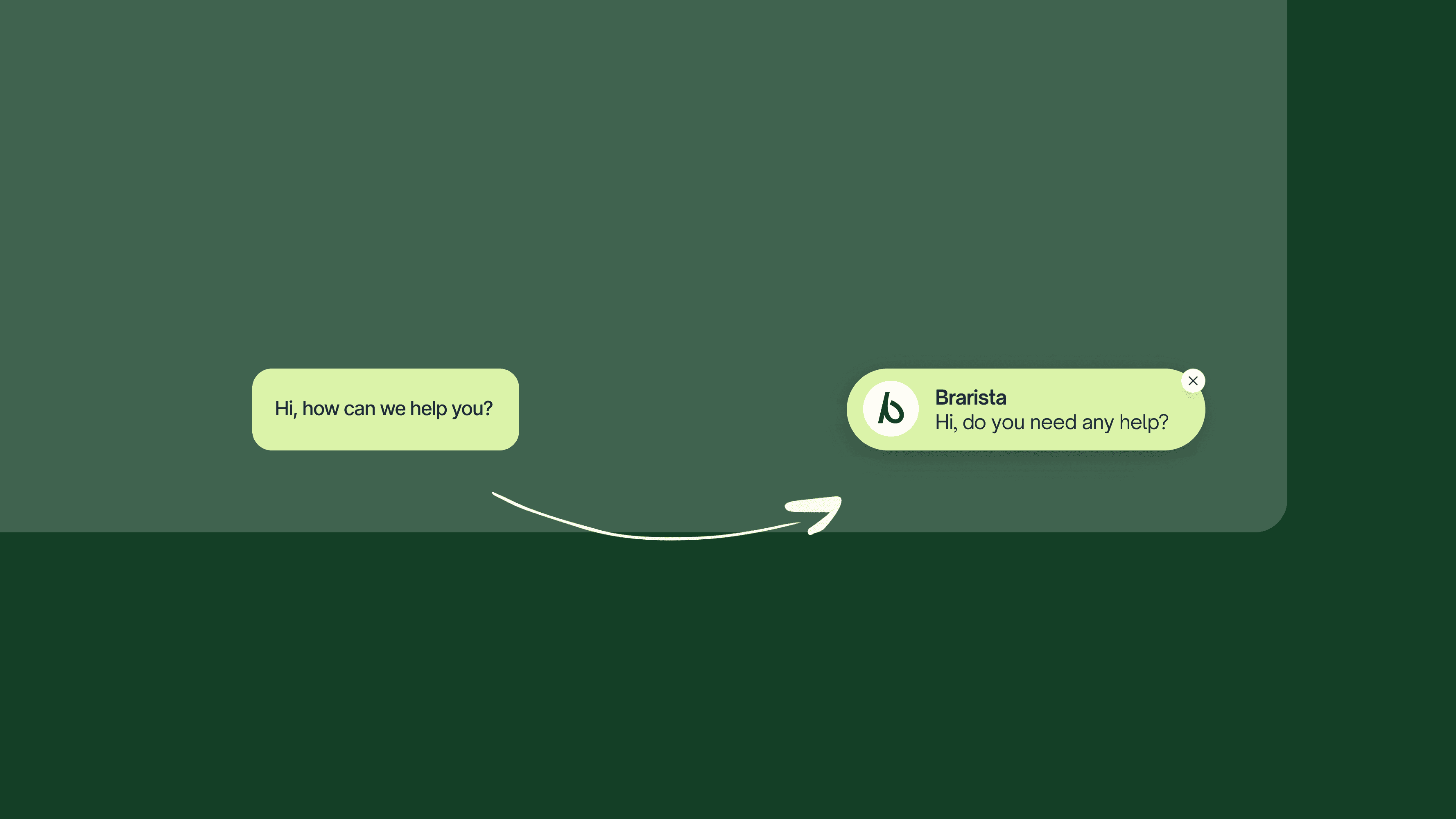
Led by senior designer. I refined UX details and aligned micro-interactions with developers.
Chatbot Landing Page Redesign
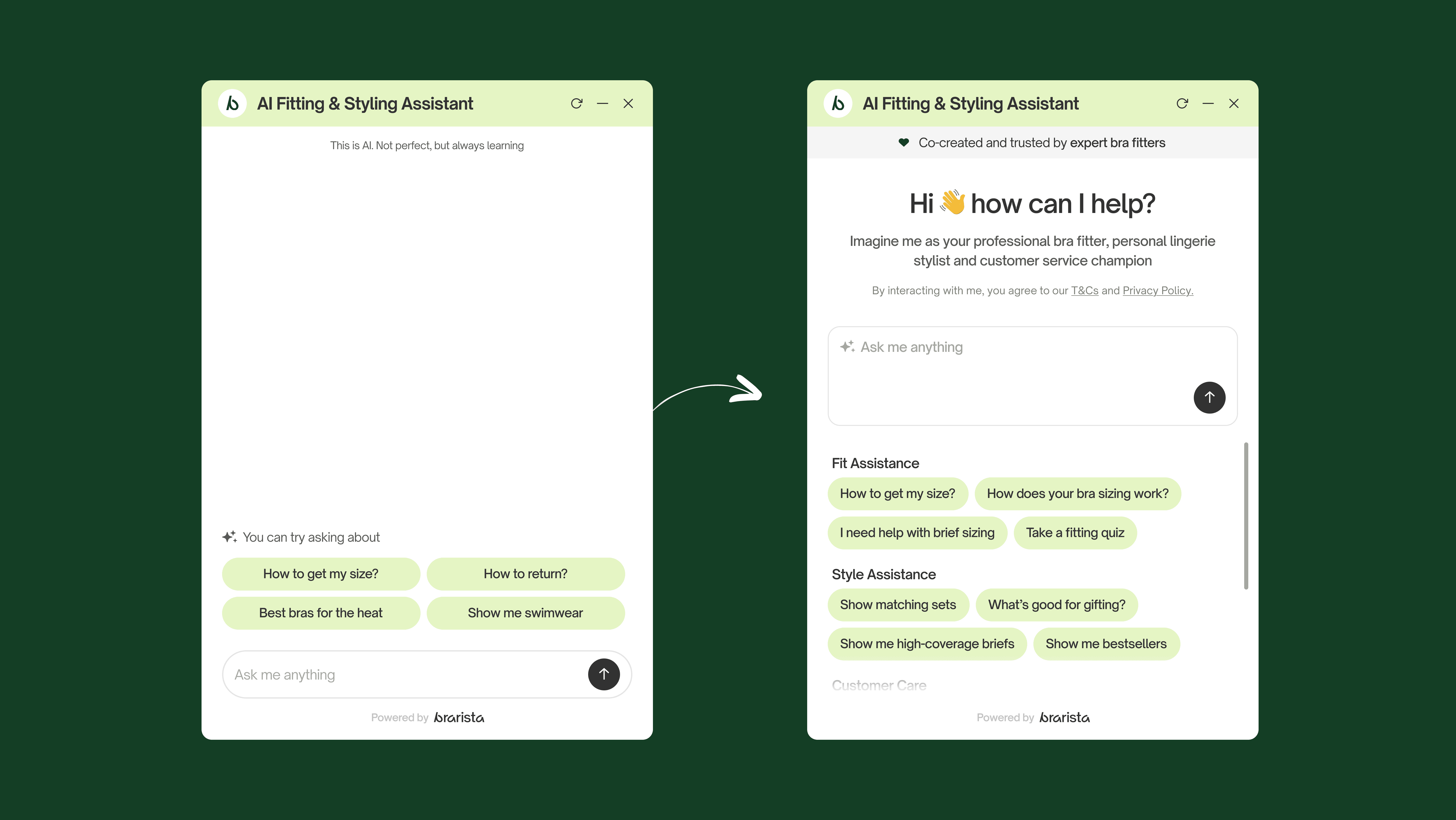
Role: Co-designed. Early exploration by senior designer; I completed the UX and brought it into production.
The Brarista Fitting Quiz
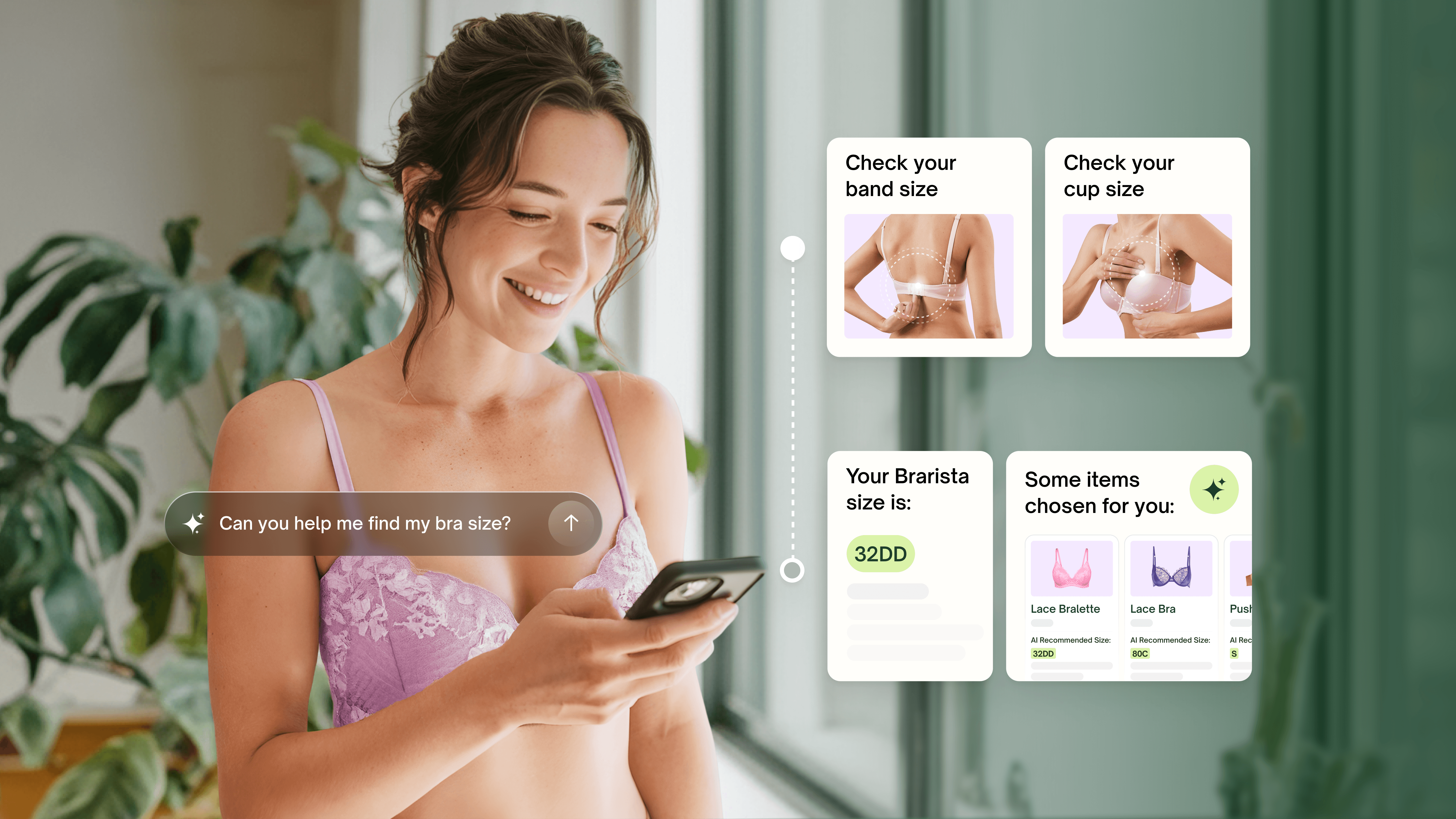
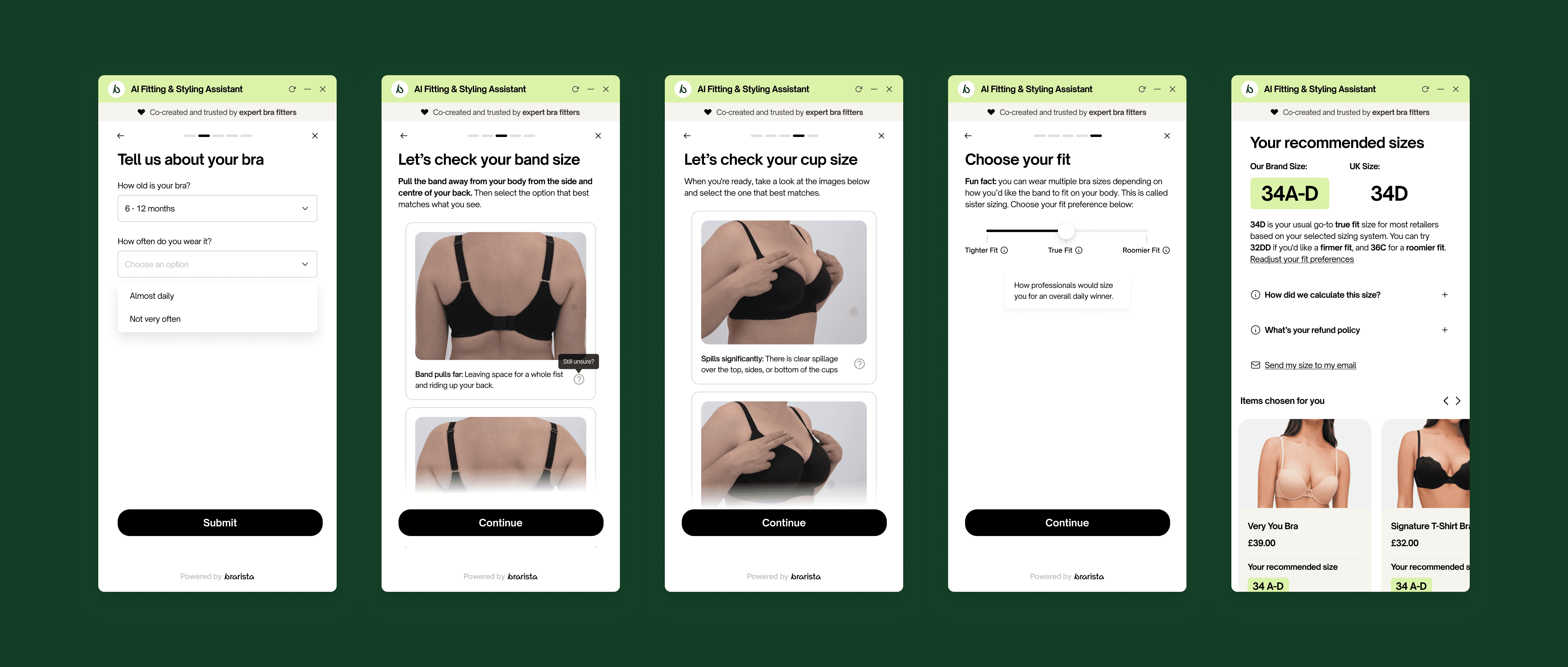
Role: Led by senior designer and founder. I contributed to ideation, UX prototyping, and collaborative decision-making. Still evolving.
Next Steps
I’m leading the design of new product touchpoints and contributing to an expanded fitting quiz. As the product matures and the ecosystem widens, system-level work is becoming a core part of my role.
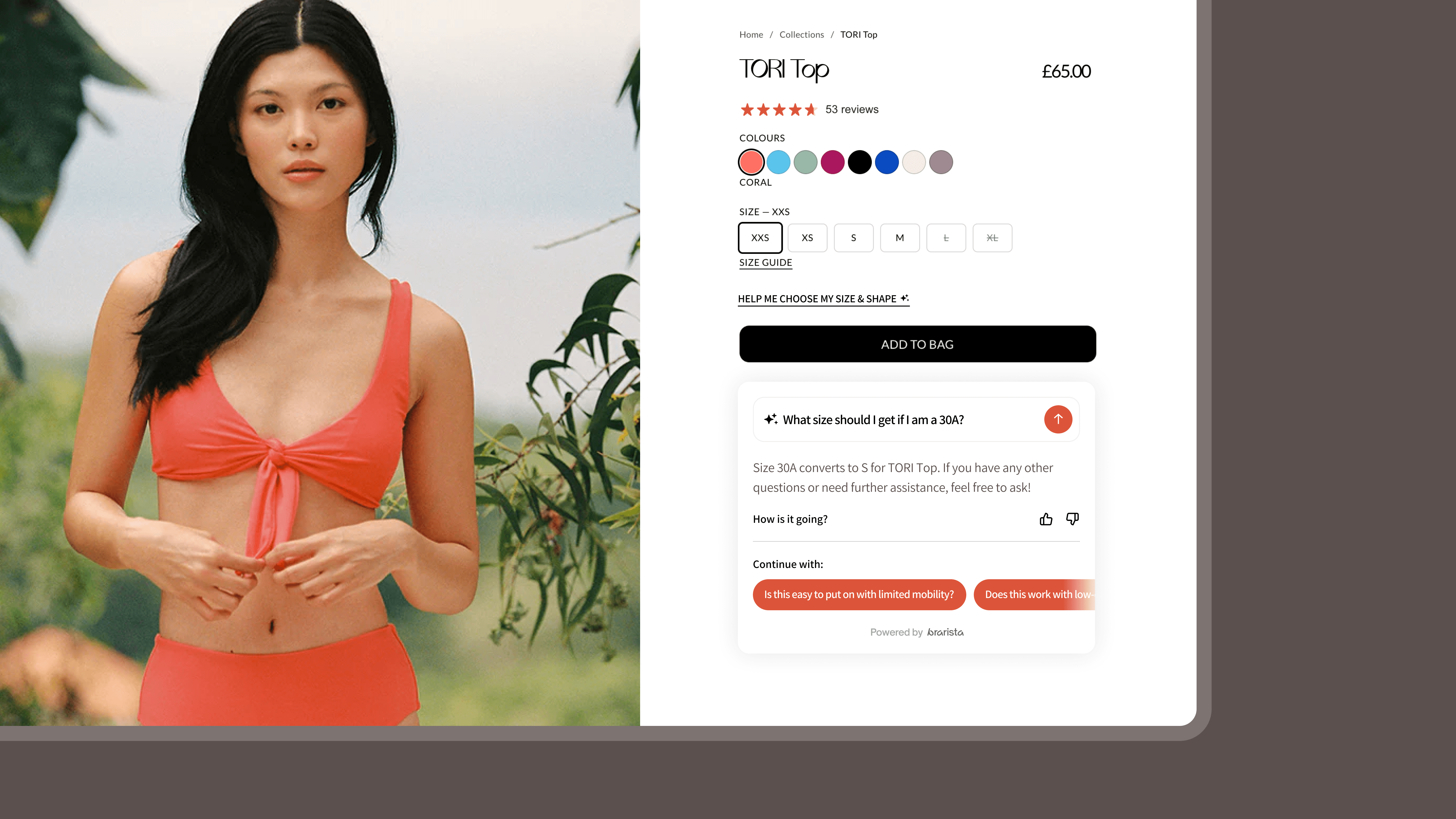
Mini Chatbot
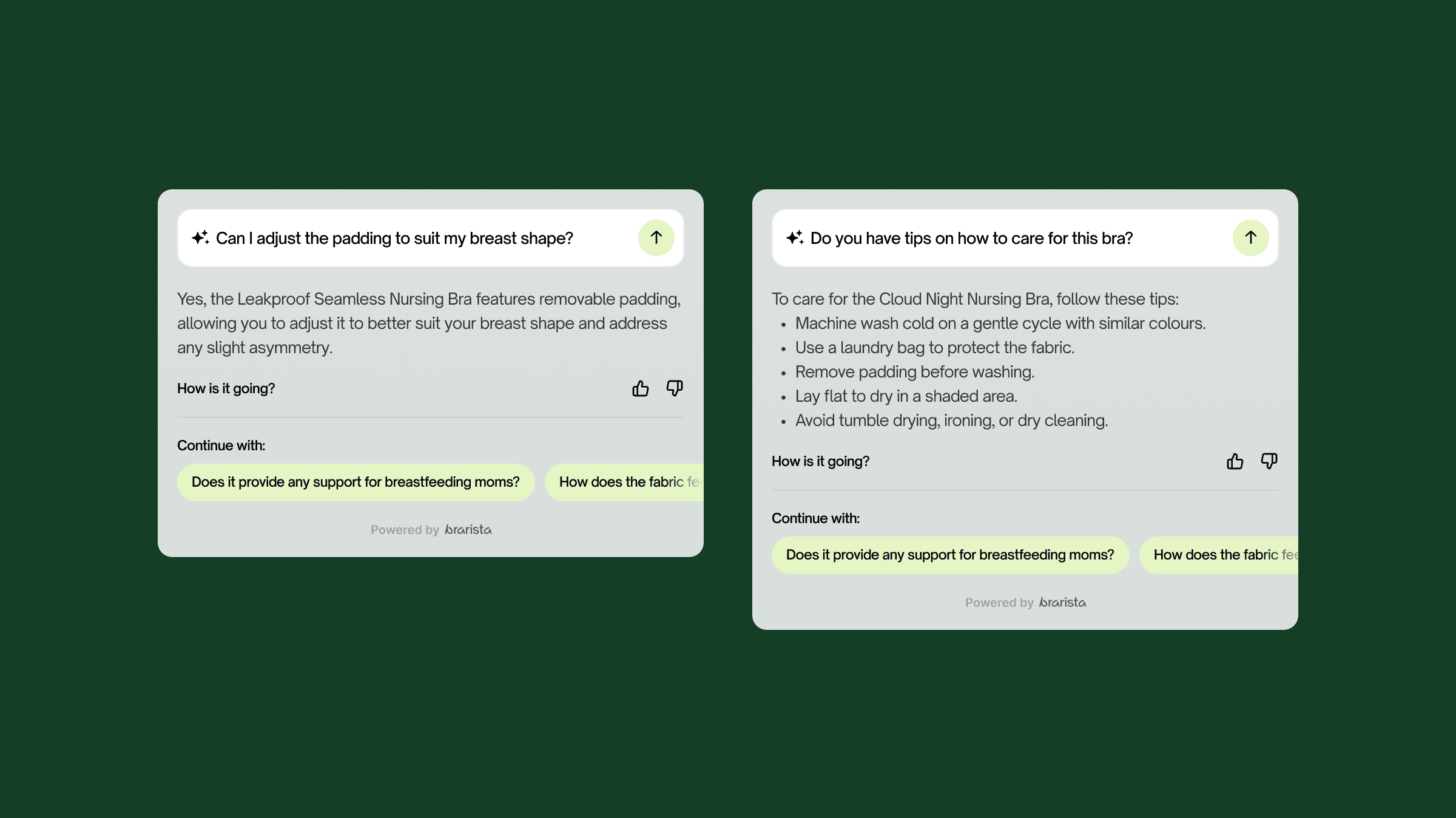
A condensed version of the full chatbot, designed to sit below the Add to Cart button on individual product pages. Early exploration by senior designer; I completed the UX and brought it into production.
Brarista Across Retail Clients
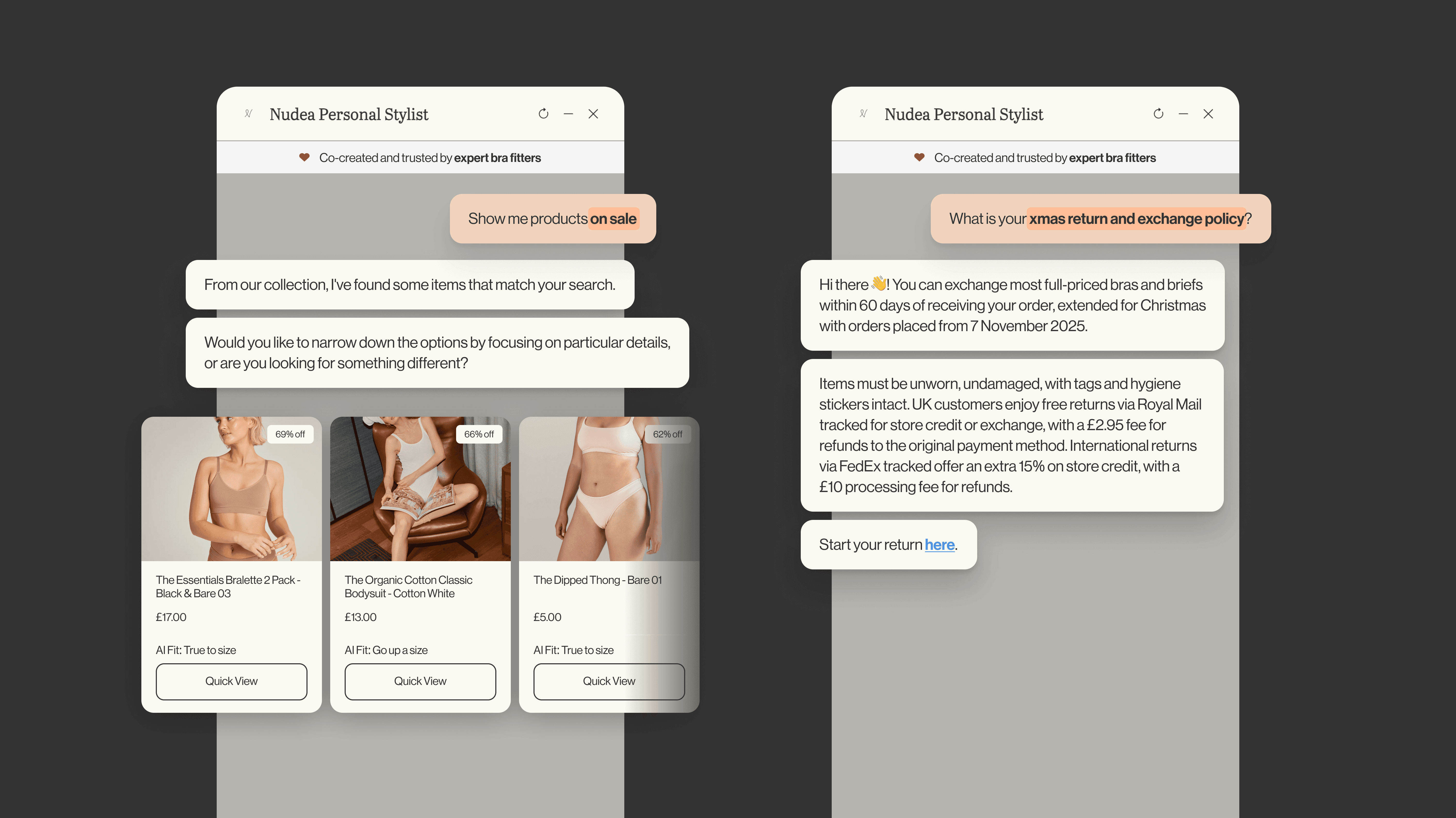
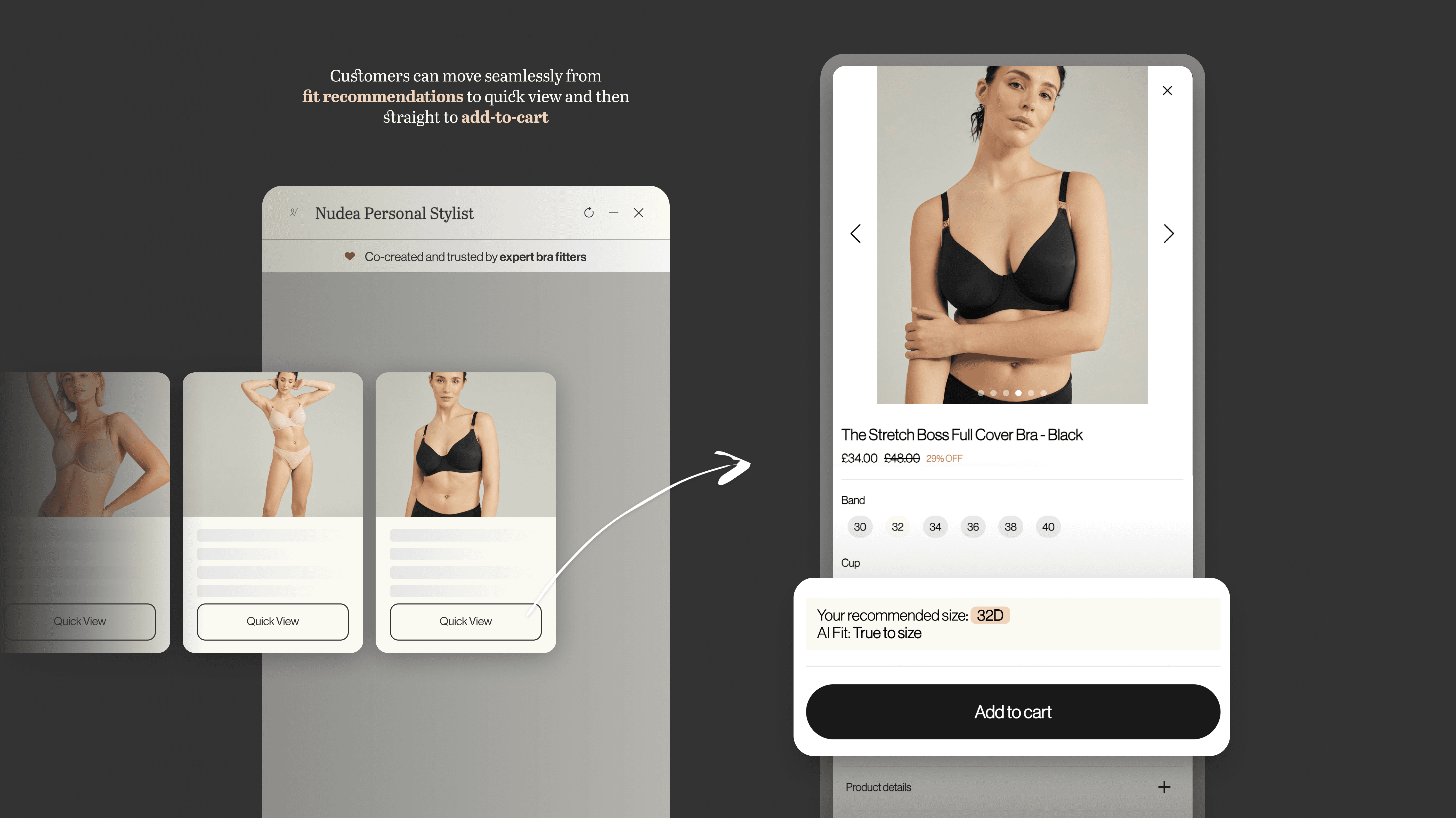
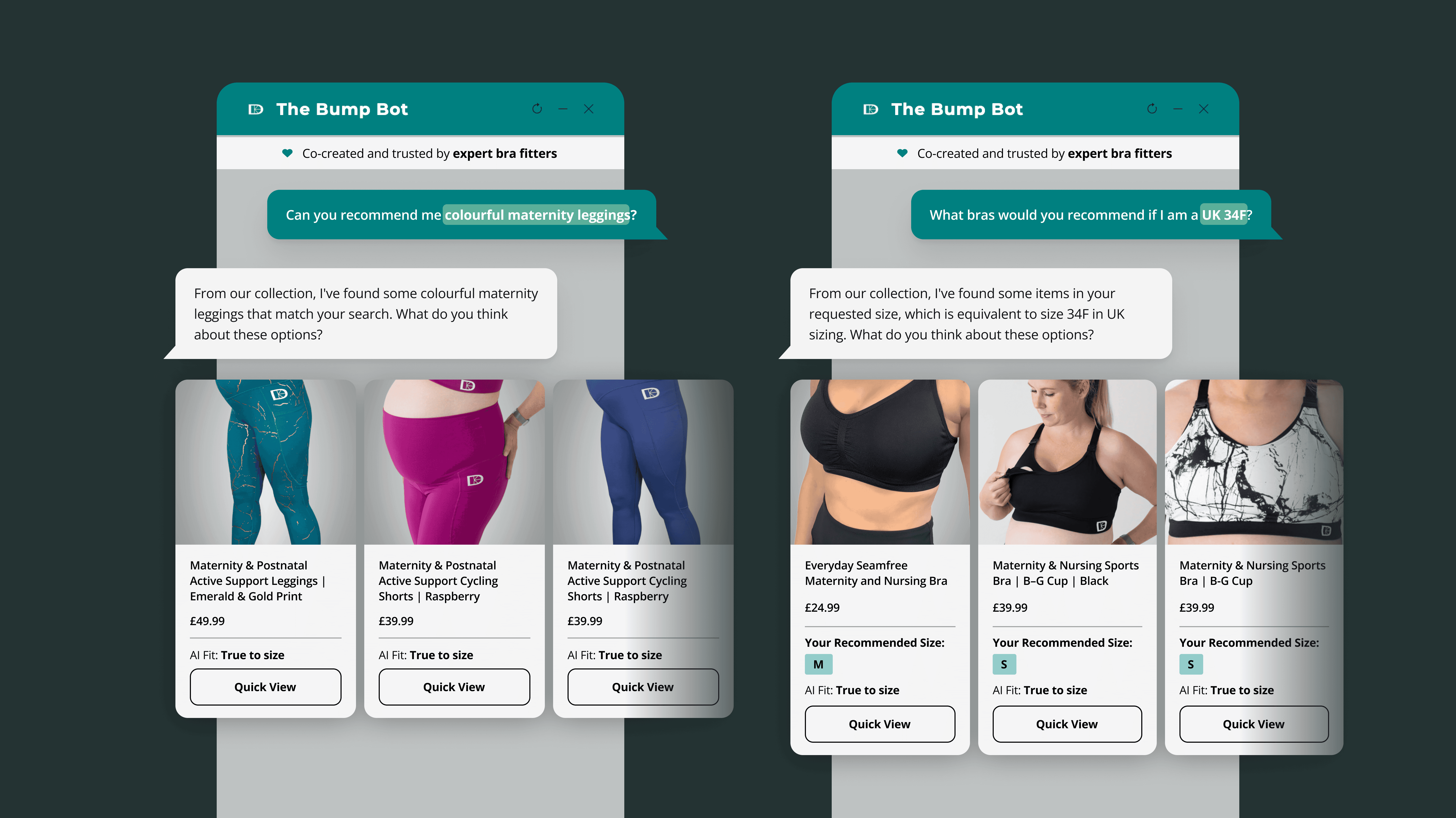
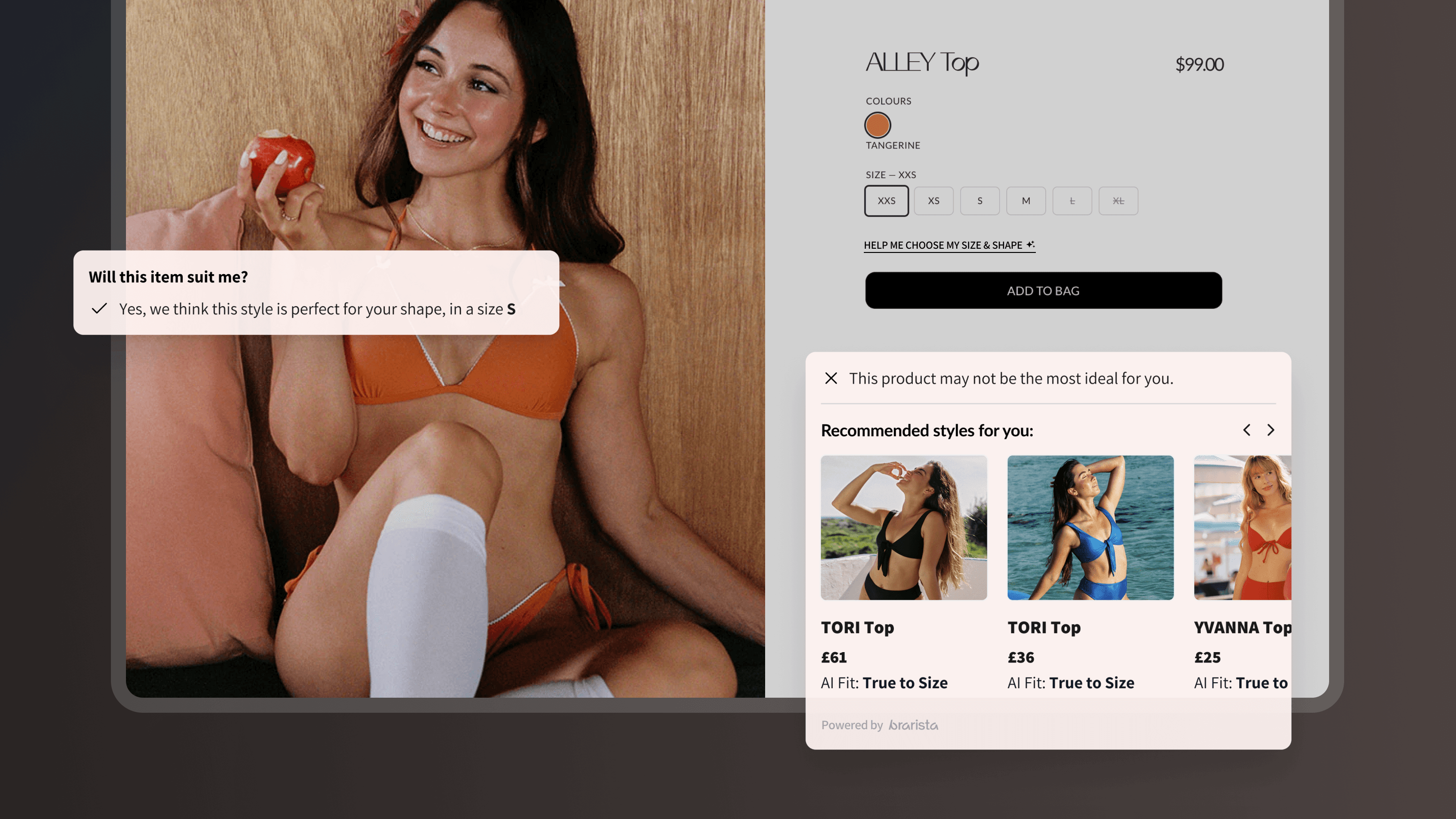
Developing the design system to balance internal consistency with cross-retailer adaptability is a core part of my role. I also own the visual onboarding of new clients end-to-end.
Marketing
Making bra fitting culturally relevant and cool 😎
As the product matured, I contributed to shaping Brarista’s narrative alongside it.
A large part of my work focused on building credibility with potential clients. I led the design of the "Wall of Love" and "Brarista vs. Other Tools" pages end-to-end, both structured to address objections and build trust through evidence and social proof. I also contributed to early ideation for the "How It Works" page and homepage redesign.
Beyond web pages, I wrote and designed customer stories and blog content that framed Brarista's milestones and industry perspectives in a way retailers could immediately understand.
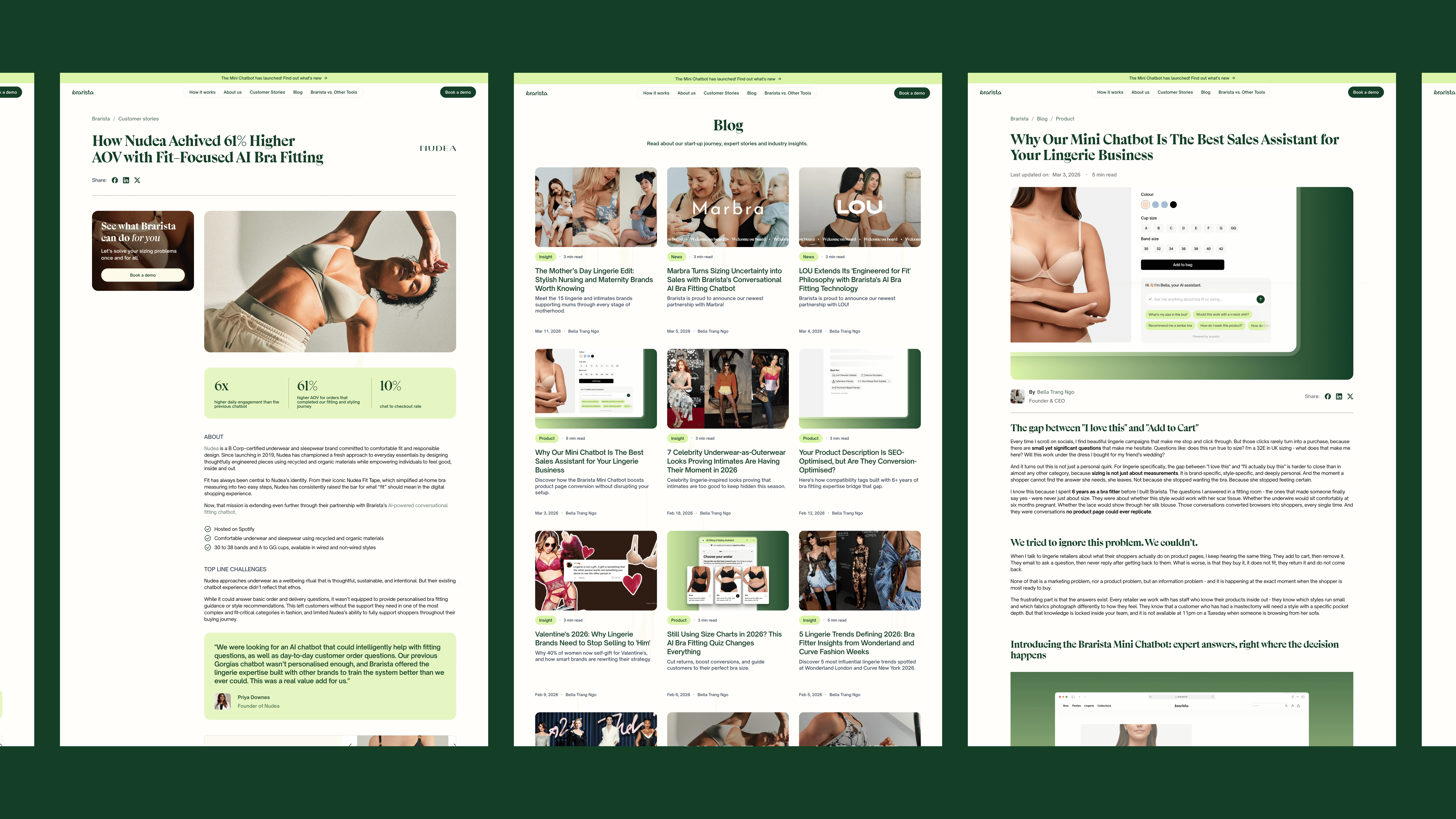
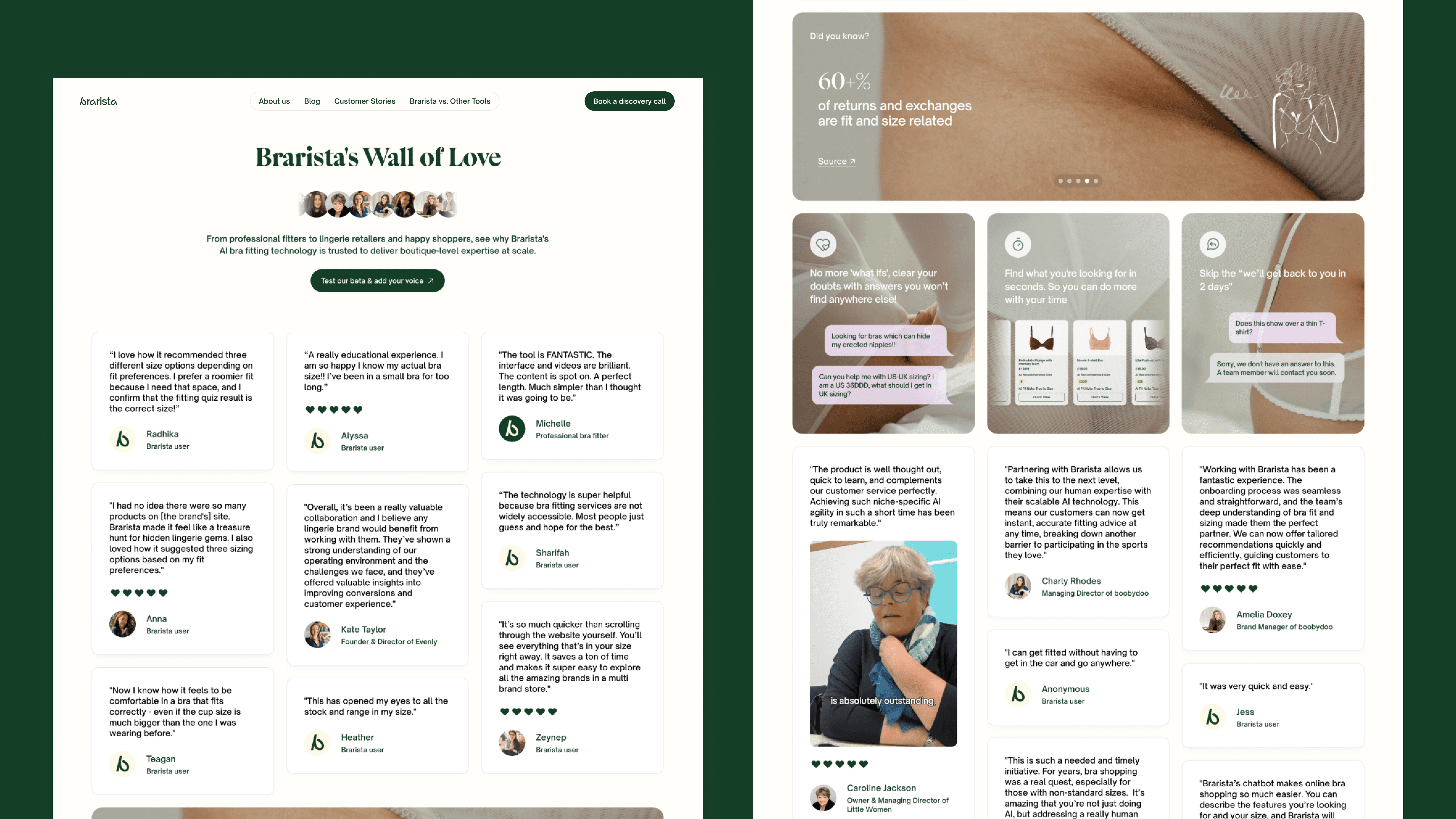


This narrative work naturally expanded onto social platforms. I managed both LinkedIn and Instagram—LinkedIn as our B2B home, Instagram as the space where decision-makers spent their off-hours.
Marketing Pillar 1: Founder Storytelling & Brand Transparency
Positioning Bella as a relatable, credible founder rather than a faceless company. This pillar builds trust and emotional investment by letting the audience witness the brand being built.
Marketing Pillar 2: Editorial Authority & Industry Commentary
Opinion-led content that positions Brarista as a credible voice in the wider fashion and lingerie conversation. We wanted to signal that Brarista belongs in the same conversation as major industry players.
Marketing Pillar 3: Social Proof & Credibility Signals
Content that validates Brarista's expertise and product through external voices (i.e. statistics and testimonials from co-creators, testers, and industry insiders).
Marketing Pillar 4: Cultural Comedy & Virality
Lighthearted, high-reach content designed to pull new audiences into the Brarista world. The goals isn't conversion but rather discovery and brand warmth.
The fictional character fitting series is the flagship example, where we translated a niche expertise into something universally entertaining.
Working closely with our optimisation and analytics lead gave me exposure to technical marketing. I learnt how content structure influences search visibility and how analytics reveal user behaviour. This shaped how I built narratives across website pages and social content, keeping storytelling grounded in data.